Deck the Stalls: The Importance of Rest for Cows
Posted: December 15, 2025 | Written By: Faith Reyes, PhD, PAS - Form-A-Feed
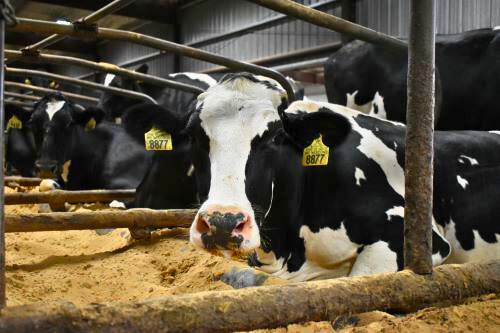
Picture yourself walking into the barn: The cows are quiet, lying comfortably in a neat line along the length of the barn as they rhythmically chew their cud.
For a dairy farmer, this is often alluded to as one of the best sights for a dairy farmer – ultimately described as a positive reflection of cows in a well-managed environment. During the chilly, holiday season, this image takes on an even warmer meaning – relaxed, cud chewing cows bring upon a sense of peace and comfort during a time that may often be quite busy. Just as everyone should take time for rest with family and friends, farmers know that seeing cows settled in their stalls is necessary and important for optimizing health, production and animal welfare.
In fact, lying time is one of the most critical indicators of cow comfort and animal welfare. Dairy cattle need ample opportunity to rest in a well-designed and managed space that allows them to achieve 10-12 hours of lying time per day.
Role of Lying Time for Dairy Cows
Cows are highly motivated to lie down throughout the day. Cows will sacrifice opportunities to eat to ensure they have a stall to rest in, particularly in an overstocked environment.1 Adequate lying time also supports hoof health by reducing risk of lameness. Prolonged periods of standing, especially on hard surfaces such as concrete, can increase the risk of lameness by adding stress on joints. Forced standing and unfavorable lying conditions have been associated with physiological stress responses, which may indicate a negative impact on the cow.2 In addition, lying behavior also promotes beneficial rumination to support digestion and nutrient absorption.
Link Between Rest and Milk Production
Beyond animal welfare and health, adequate lying time has an impact on milk production potential. Many studies have shown that less lying time, especially lower than the 10-12 hour threshold is associated with lower milk production. Lying down can also assist with blood flow to the udder to aid in recovery and milk synthesis. Optimizing time spent standing and out of the home pen for milking and restraint during vet checks is crucial. Extended periods in the holding pen prior to milking reduces the time available for cows to lie down and eat in their home pens.
Freestall Design Matters
The design and accessibility of a freestall is imperative. A well-designed stall allows cows to enter, lie and rise without obstruction, including soft bedding to promote cleanliness and comfort. Appropriate stall dimensions tailored to the cow demographic and stature, as well as bedding type and cleanliness determine the opportunity for beneficial use of a stall by each cow. For example, stalls that are too narrow, too short, or poorly bedded discourage use. The strong drive to lie down may lead cows to lie down in areas that are not ideal (i.e. alleyways) that can pose additional cleanliness and health risks. The Dairyland Initiative website is a great resource for in-depth stall designs and dairy industry recommendations.
Stocking Density and Access
Well-designed stalls and lying areas can only be truly optimized when paired with an appropriate stocking density. Cows exhibit different routines throughout the day and have been shown to adjust their behaviors to access important resources in crowded, overstocked environments.3 However, providing access and ample opportunity to lie down is very important. Each cow should have a space to lie down at the same time, meaning 1 stall per cow with 100% stocking density at the bedding stall level.
Optimizing Management with Monitoring
Producers can monitor lying behavior as a practical measure of cow comfort. Observing cow behavior throughout the day can serve as baselines for comparison and a helpful benchmark. Approximately 90% of stalls should be filled with cows that are lying down within two hours after milking.4 If cows are standing idly or loitering, this behavior may signal a problem with stall design, bedding, or stocking density. On the other hand, the importance of observing cows on a regular basis plays a huge role since individual cow factors can play a role. For example, lame cows often lie down more compared to sound, not lame cows. Routine observation, combined with data from activity monitors, helps farmers identify issues early and make adjustments.
Conclusion
Lying time is a cornerstone of dairy cow welfare and productivity. When cows get the rest they need, cows are often healthier, more efficient, and cost less to manage. Investments in stall comfort, proper stocking density, and regular monitoring isn’t just good practice—it’s good business. Every hour a cow spends lying comfortably is an hour that supports your farm’s success. Rest is the gift that continually keeps on giving, for both farmers and their cows.
References may be made available upon request.