Starting Your Chicks Off Right
Posted: March 2, 2026 | Written By: Connor Padgett, Ph.D.
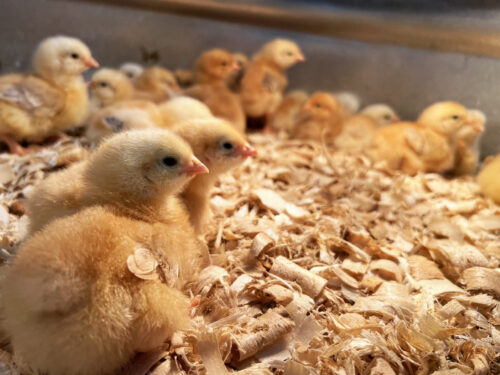
With spring just around the corner, there’s a new sense of life across our homesteads – fresh leaves budding on the trees, calves hitting the ground, and of course, fluffy new chicks joining the laying flock. As we get ready to welcome a new batch, it’s the perfect time to refresh ourselves on the basics – especially if it’s been a year since you last raised chicks.
When starting chicks, I like to remember the FLAWs: Feed, Lights, Air and Water. When evaluating your setup, it helps to work backwards through the list.
Water: Water quality is critical for young chicks. Always provide a clean source of fresh water, and refresh it daily, especially if it has been soiled with bedding material or feed.
If your new chicks have been shipped or transported long distances, adding electrolytes to their water for the first few days can help reduce stress and support hydration. Place waterers where chicks can easily find them, and gently dip each chicks beak when you first introduce them to the brooder to make sure they learn where the water is.
Air: Air quality can be a challenge, especially here in the Midwest where spring temperatures can swing wildly from one day to the next.
Chicks should be kept at 95°F for their first week of life, then decrease the temperature by 4-5°F per week until they are fully feathered and comfortable around 70°F. But temperature isn’t the only factor – ventilation matters just as much. If you’re using reused bedding or housing chicks in a building that currently holds older hens, make sure you have good airflow. Even in cooler weather, brief periods of ventilation help reduce moisture and ammonia buildup. Proper litter management, including dry bedding and ammonia-reducing products, helps keep chicks’ delicate respiratory systems healthy.
Lights: Lighting needs to change as chicks grow. For mature hens, we aim for 14-16 hours of light per day to support consistent egg production, and this can be a combination of natural daylight and artificial lighting.
Chicks however benefit from 24 hours of light during their first week to help them easily locate feed and water. A properly positioned heat lamp (with a white bulb) can typically provide sufficient light during this stage. From 2-4 weeks of age, we would aim to reduce lighting to 16-18 hours of light per day to begin encouraging normal day-night behavior. By 4-5 weeks of age, most chicks can transition to natural daylight schedules.
Feed: Though listed last, feed is certainly not least in importance. High-quality starter feed sets the foundation for a healthy flock.
Choose a chick starter/grower crumble that meets nutritional requirements and is easily palatable for young birds. We recommend a crumble for one day of age through 16 weeks, and after that transitioning birds to a balanced layer ration once they are nearing the point of lay to support egg production.
These guidelines aren’t hard-and-fast rules – everyone’s setup is a little different. Brooder size, weather, breed and management style all play a role in how you raise your chicks. But keeping the FLAW principles in mind helps to make sure you are covering the essentials.
Whether you’re raising a handful of backyard birds or managing a larger operation, preparation and attention to detail go a long way towards building a healthy and productive flock.
If you have any questions regarding your feed needs, litter or ammonia management, or starting your operation off on the right foot this season, please reach out to your Form-A-Feed representative to see how we can best help you!